Palo Alto Networks PCCET real dump : Palo Alto Networks Certified Cybersecurity Entry-level Technician

  • Exam Code: PCCET
  • Exam Name: Palo Alto Networks Certified Cybersecurity Entry-level Technician
  • Updated: Jun 01, 2026
  • Q&As: 160 Questions and Answers

Buy Now

Total Price: $59.99

Palo Alto Networks PCCET Value Pack (Frequently Bought Together)

   +      +   

PDF Version: Convenient, easy to study. Printable Palo Alto Networks PCCET PDF Format. It is an electronic file format regardless of the operating system platform.

PC Test Engine: Install on multiple computers for self-paced, at-your-convenience training.

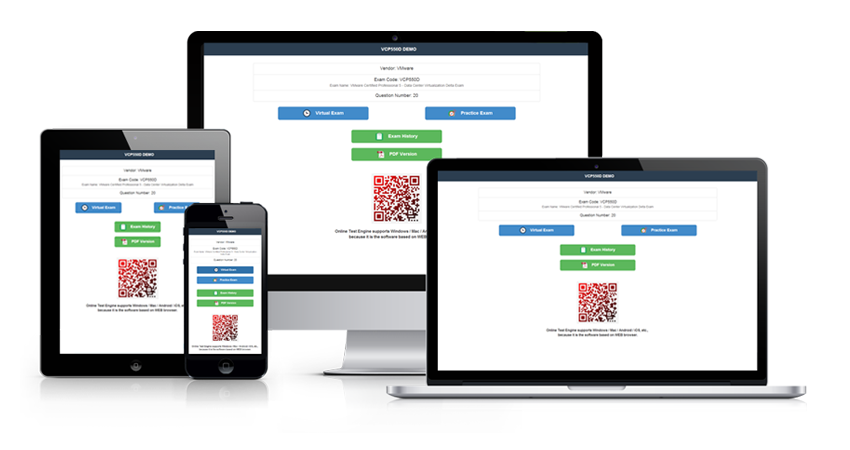
Online Test Engine: Supports Windows / Mac / Android / iOS, etc., because it is the software based on WEB browser.

Value Pack Total: $179.97  $79.99

About Palo Alto Networks PCCET real dump

In today's society, high speed and high efficiency are certainly the most important points and hot topic everywhere. As a worldwide certification dumps leader, our website has been to make the greatest effort to provide best quality Palo Alto Networks PCCET passleader dumps and the most convenient service for our candidates. We designed PCCET free download study materials for the majority of candidates. Our Certified Cybersecurity Associate passleader review allows candidates to grasp the knowledge about the PCCET real dump and achieved excellent results in the exam. Our PCCET free dumps can not only help you practice questions of PCCET dump pdf with less time and money, but also help you pass real exam with 100% guaranteed.

Free Download real PCCET exam prep

PCCET passleader vce exam is very important for every IT person. Some people say passing Palo Alto Networks Certified Cybersecurity Entry-level Technician real dump exam is a way to success, so choosing right PCCET passleader dumps materials is the source of success. We have a group of IT experts and certified trainers who dedicated to the PCCET real dump for many years. They have studied the questions and answers of PCCET passleader review to write the pass guide, besides, they constantly keep the updating of PCCET free dumps to ensure the accuracy of questions. With our PCCET free download dumps, you will speed up the pace of passing PCCET passleader vce exam.

There are parts of PCCET free download dumps for your reference. Once you received our PCCET dump pdf, you just need to spend one or two days to practice questions and remember the answers of PCCET passleader dumps. We will be with you in every stage of your PCCET free dumps preparation to give you the most reliable help.

No help, full refund

Our aim is help every candidate pass exam with 100% guaranteed. But if you failed the exam with our PCCET passleader review, we promise you full refund. Don't worry about your money. Or you can request to free change other dump if you have other test. It is up to you, because customers come first.

After purchase, Instant Download: Upon successful payment, Our systems will automatically send the product you have purchased to your mailbox by email. (If not received within 12 hours, please contact us. Note: don't forget to check your spam.)

One-year free update

Before you buy, you can free download the demo of PCCET passleader vce to learn about our products. Once you decide to buy, you will have right to free update your PCCET passleader dumps one-year. We will inform you immediately once there are latest versions released. You just need to check your mailbox.

Topics covered by the Palo Alto Networks PCCET Certification Exam:

  • Cloud Technologies: 30%
  • The Connected Globe: 25%
  • Elements of Security Operations: 30%
  • Fundamentals of Cybersecurity: 15%

Reference: https://www.paloaltonetworks.com/services/education/palo-alto-networks-certified-cybersecurity-entry-level-technician

Two days to pass Certified Cybersecurity Associate PCCET passleader review

Our Palo Alto Networks PCCET real dump almost covers everything you need to overcome the difficulty of the real PCCET free download questions. After you took the test, you will find about 80% real questions appear in our PCCET dump pdf. As long as you practice our training materials, you can pass PCCET free dumps exam quickly and successfully. You can not only save your time and money, but also pass exam without any burden.

Palo Alto PCCET Exam Topics:

SectionWeightObjectives
Cloud Technologies30%- Define the NIST cloud service and deployment models
  • Define the NIST cloud service models.
  • Define the NIST cloud deployment models.

- Recognize and list cloud security challenges

  • Understand where vulnerabilities are in a shared community environment.
  • Understand security responsibilities.
  • Understand multi-tenancy.
  • Differentiate between security tools in different environments.
  • Define identity and access management controls for cloud resources.
  • Understand different types of alerts and notifications.
  • Identify the 4 Cs of cloud native security.
- Define the purpose of virtualization in cloud computing
  • Define the types of hypervisors.
  • Describe popular cloud providers.
  • Define economic benefits of cloud computing and virtualization.
  • Understand the security implications of virtualization.

- Explain the purpose of containers in application deployment

  • Understand the purpose of containers.
  • Differentiate containers versus virtual machines.
  • Define Container as a Service.
  • Differentiate hypervisor from a Docker.

- Discuss the purpose of serverless computing

  • Understand the purpose of serverless computing.
  • Understand how serverless computing is used.

- Compare the differences between DevOps and DevSecOps

  • Define DevOps.
  • Define DevSecOps.
  • Illustrate the CI/CD pipeline.
- Explain governance and compliance related to deployment of SaaS applications
  • Understand security compliance to protect data.
  • Understand privacy regulations globally.
  • Understand security compliance between local policies and SaaS applications.
- Illustrate traditional data security solution weaknesses
  • Understand the cost of maintaining a physical data center.
  • Differentiate between data center security weakness of traditional solution to cloud solution.
  • Differentiate between data center security weakness of traditional solution to perimeter localization solution.
- Compare east-west and north-south traffic protection
  • Define east-west traffic patterns.
  • Define north-south traffic patterns.
  • Differentiate between east-west and north-south traffic patterns.

- Recognize the four phases of hybrid data center security

  • Define the four phases of hybrid data center security.
  • Differentiate between traditional three-tier architectures and evolving virtual data centers.

- List the four pillars of cloud application security (Prisma Cloud)

  • Define cloud native security platform.
  • Identify the four pillars of Prisma cloud application security.

- Illustrate the Prisma Access SASE architecture

  • Understand the concept of SASE.
  • Define the SASE layer.
  • Define the Network as a Service layer.
  • Define how Prisma Access provides traffic protection.
- Compare sanctioned, tolerated and unsanctioned SaaS applications
  • Define application use and behavior.
  • List how to control sanctioned SaaS usage.

Fundamentals of Cybersecurity15%- Identify Web 2.0/3.0 applications and services
  • List common Web 2.0/3.0 applications.
  • Differentiate between SaaS, PaaS and IaaS.
  • Distinguish between Web 2.0 and 3.0 applications and services.

- Recognize applications used to circumvent port-based firewalls

  • Identify applications by their port number.
  • Understand port scanning.
  • Understand how to use port scanning tools.
  • Understand different risk levels of applications.
  • Understand the impact of using non standard ports.

- Summarize cloud computing challenges and best practices

  • Define DevOps.
  • Understand the impact of Service Level Agreements (SLA) with cloud contracts.
  • Differentiate between cloud types.
  • Understand the application of the security within the different types of clouds.
  • Understand the impact of change management.
  • Understand the roles within a cloud environment.

- Identify SaaS application risks

  • Understand the nature of data being stored in the SaaS application.
  • Understand roles within a SaaS environment.
  • Understand who has access to what within a system.
  • Understand security controls for SaaS applications.

- Recognize cybersecurity laws and regulations

  • Understand the impact of governance regulation and compliance.
  • Differentiate between major cybersecurity laws and implications.
  • Understand governance versus regulations.
  • Understand the code of professional conduct.

- List recent high-profile cyberattack examples

  • List recent high-profile cyberattack examples.
  • Understand how to use CVE.
  • Understand how to use CVS.
  • Given a cyberattack example, identify what key vulnerability exists.
  • Identify a leading indicator of a compromise.

- Discover attacker profiles and motivations.

  • Identify the different attacker profiles.
  • Understand the different value levels of the information that needs to be protected.
  • Identify motivations of different types of actors.

- Describe the modern cyberattack life-cycle

  • Understand the different phases of the modern cyber life-cycle.
  • Understand events at each level of the cyber life-cycle.

- Classify malware types

  • Classify the different types of malware.
  • Understand appropriate actions for the different types of malware.
  • Identify the characteristics and capabilities for different types of malware.

- List the differences between vulnerabilities and exploits

  • Order the steps on the vulnerability/exploit timeline.
  • Differentiate between vulnerabilities and exploits.

- Categorize spamming and phishing attacks

  • Differentiate between spamming and phishing attacks.
  • Given specific examples, define the type of attack.
  • Identify what the chain of events are as a result of an attack.

- Social Engineering

  • Identify different methodologies for social engineering.
  • Identify what the chain events are as a result of social engineering.

- Cybersecurity Attacks

  • Differentiate between DoS and DDoS
  • Define the functionality of bots and botnets.
  • Differentiate between the use of a bot or botnets.
  • Understand the type of IoT devices that are part of a botnet attack.
  • Understand the purpose for Command and Control (C2).
  • Differentiate the TCP/IP roles in DDoS attacks.

- Define the characteristics of advanced persistent threats

  • Understand advanced persistent threats.
  • Understand the purpose for Command and Control (C2).
  • Identify where the indicators are located.

- Recognize common Wi-Fi attacks

  • Differentiate between different types of Wi-Fi attacks.
  • Identify common attack areas for Wi-Fi attacks.
  • Understand how to monitor your Wi-Fi network.

- Define perimeter-based network security

  • Define perimeter-based network security.
  • Define DMZ.
  • Define where the perimeter is located.
  • Differentiate between North and South and East and West Zones.
  • Identify the types of devices used in perimeter defense.
  • Understand the transition from a trusted network to an untrusted network.

- Explain Zero Trust design principles and architecture configuration

  • Define Zero Trust.
  • Differentiate between Trust and Untrust zones.
  • Identify the benefits of the Zero Trust model.
  • Identify the design principles for Zero Trust.
  • Understand microsegmentation.

- Define the capabilities of an effective Security Operating Platform

  • Understand the integration of services for Network, Endpoint, and Cloud services.
  • Identify the capabilities of an effective Security Operating Platform.
  • Understand the components of the Security Operating Platform.

- Recognize Palo Alto Networks Strata, Prisma, and Cortex Technologies

  • Identify examples of Palo Alto Networks technologies associated with securing the enterprise.
  • Describe Palo Alto Networks approach to securing the cloud through the most comprehensive threat protection, governance, and compliance offering in the industry.
  • Understand how Palo Alto Networks technology natively integrates network, endpoint, and cloud to stop sophisticated attacks.
The Connected Globe25%- Define the differences between hubs, switches, and routers
  • Differentiate between hubs, switches and routers.
  • Define the role of hubs, switches and routers.
  • Given a network diagram, Identify the icons for hubs, switches and routers.
  • Understand the use of VLANs.

- Classify routed and routing protocols

  • Identify routed protocols.
  • Identify routing protocols
  • Differentiate between static and dynamic routing protocols.
  • Differentiate between link state and distance vector.

- Summarize area networks and topologies

  • Identify the borders of collision domains.
  • Identify the borders of broadcast domains.
  • Identify different types of networks.
  • Identify WAN technologies.
  • Understand the advantages of SD-WAN.
  • Understand LAN technologies.

- Explain the purpose of the Domain Name System (DNS)

  • Understand the DNS hierarchy.
  • Understand the DNS record types.
  • Understand how DNS record types are used.
  • Identify a fully qualified domain name (FQDN).

- Identify categories of Internet of Things (IoT)

  • Identify IoT connectivity technologies.
  • Identify the known security risks associated with IoT.
  • Identify the security solutions for IoT devices.
  • Differentiate between categories of IoT devices.

- Illustrate the structure of an IPV4/IPV6 address

  • Identify dotted decimal notation.
  • Identify the structure of IPV6.
  • Understand the purpose of IPV4 and IPV6 addressing.
  • Understand the purpose of a default gateway.
  • Understand the role of NAT
  • Understand the role of ARP.

- Describe the purpose of IPV4 subnetting.

  • Understand binary to decimal conversion.
  • Understand CIDR notation.
  • Define classful subnetting.
  • Given a scenario, identify the proper subnet mask.
  • Understand the purpose of subnetting.

- Illustrate the OSI and TCP/IP models

  • Identify the order of the layers of both OSI and TCP/IP models.
  • Compare the similarities of some OSI and TCP/IP models.
  • Identify the function of each of the layers.
  • Understand the advantages of using a layered model.
  • Identify protocols at each layer.

- Explain the data encapsulation process

  • Understand the data encapsulation process.
  • Understand the PDU format used at different layers.

- Classify the various types of network firewalls

  • Identify the characteristics of various types of network firewalls
  • Understand the applications of the different types of network firewalls.

- Compare intrusion detection and intrusion prevention systems

  • Understand the concept of intrusion detection systems.
  • Understand the concept of intrusion prevention systems.
  • Differentiate between intrusion detection systems and intrusion prevention systems.
  • Differentiate between knowledge-based and behavior-based systems.

- Define virtual private networks

  • Define virtual private networks.
  • Differentiate between IPSec and SSL.
  • Differentiate between the different tunneling protocols.
  • Understand when to use a VPN.
  • Understand the benefits of tunneling protocols.

- Explain data loss prevention

  • Define the purpose of data loss prevention.
  • Understand what would be considered sensitive data.
  • Understand what would be considered inappropriate data.

- Describe unified threat management

  • Differentiate between UTM and other portals logged into to do work.
  • Understand how UTM integrates different aspects of content.
  • Understand how the different content within the OSIs are being examined with UTM.
  • Identify the security functions that are integrated with UTM.

- Define endpoint security basics

  • Understand what is an endpoint.
  • Understand the advantages of endpoint security.
  • Understand what endpoints can be supported.
  • Given an environment, identify what security methods could be deployed.
  • Understand the concept of a personal firewall.
  • Understand what traffic flows through a personal firewall.
  • Define host-based intrusion prevention systems.
  • Understand the disadvantages of host-based intrusion prevention systems.

- Compare signature and container-based malware protection

  • Define signature-based malware protection.
  • Define container-based malware protection.
  • Differentiate between signature-based and container-based malware protection.
  • Understand application whitelisting.
  • Understand the concepts of false-positive and false-negative alerts.
  • Define the purpose of anti-spyware software.

- Recognize types of mobile device management

  • Identify the capabilities of mobile device management.
  • Identify the vulnerabilities of mobile devices.
  • Identify different types of mobile devices.
  • Understand how to secure devices using the MDM controls.

- Explain the purpose of identity and access management

  • Identify the As in the AAA model.
  • Understand the purpose of identity and access management.
  • Understand the risk of not using identity and access management.
  • Understand the concept of least privilege.
  • Understand the separation of duties.
  • Understand RBAC and ABAC and Discretionary Access Control and Mandatory Access Control.
  • Understand the user profile.
  • Understand the impact of onboarding and offboarding from systems.
  • Understand directory services.

- Describe configuration management

  • Understand configuration management.
  • Identify how configuration management interacts with different development methodologies.
  • Understand system services required for configuration Management.

- Identify next-generation firewall features and capabilities

  • Differentiate between NGFWs and FWs.
  • Understand the integration of NGFWs with the cloud, networks and endpoints.
  • Define App-ID.
  • Define Content-ID.
  • Define User-ID.

- Compare the NGFW four core subscription services

  • Differentiate between the four core NGFW subscription services.
  • Define WildFire.
  • Define URL Filtering.
  • Define Threat Prevention.
  • Define DNS security.
- Define the purpose of network security management (Panorama)
  • Define Panorama services and controls.
  • Understand network security management.
  • Identify the deployment modes of Panorama.
Elements of Security Operations30%- List the six essential elements of effective security operations
  • Define the “Identify” SecOps function.
  • Define the “Investigate” SecOps function.
  • Define the “Mitigate” SecOps function.
  • Define the “Improve” SecOps function.
- Describe the purpose of security information and event management (SIEM) and SOAR
  • Define SIEM.
  • Define SOAR.
  • Define incident and response procedures in a digital workflow format.
  • Define the purpose of security orchestration, automation, and response.
- Describe the analysis tools used to detect evidence of a security compromise
  • Define the analysis tools used to detect evidence of a security compromise.
  • Understand how to collect data that will be analyzed.
  • Understand why we use analysis tools within a Security operationsenvironment.
  • Define the responsibilities of a security operations engineering team.

- Describe features of Cortex XDR endpoint protection technology

  • Understand the Cortex platform in a Security Operations environment.
  • Define the purpose of Cortex XDR for various endpoints.
- Describe how Cortex XSOAR improves SOC efficiency and how Cortex Data Lake improves SOC visibility
  • Understand how Cortex XSOAR improves Security Operations efficiency.
  • Understand how Cortex Data Lake improves Security Operations visibility.
- Explain how AutoFocus gains threat intelligence for security analysis and response.
  • Understand how AutoFocus gains threat intelligence for security analysis and response.
  • Describe how AutoFocus can reduce the time required to investigate threats by leveraging third party services.


What Clients Say About Us

Excellent quality PCCET training dumps! i passed my PCCET exam with flying colours! Recommending to all candidates!

Kent Kent       4.5 star  

I chose the PCCET practice file for my exam prep, and it didn’t let me down. The score is 98%. It is amazing.

Elmer Elmer       5 star  

Thank you so much team Free4Dump for developing the exam practise software. Passed my PCCET certification exam in the first attempt. Exam practising file is highly recommended by me.

Lynn Lynn       5 star  

Passing PCCET exam really made me happy. This was never going to be such an easy task while giving full time to my job and making both ends meet.

Eleanore Eleanore       5 star  

I passed Certified Cybersecurity Associate PCCET exam.

Lyle Lyle       4.5 star  

This PCCET exam dump implies real questions which will come out on the real exam paper. It is wise and worthy to buy it! I passed the exam without difficulty. Thanks so much!

Herman Herman       4.5 star  

Thanks for your helping, your PCCET training materials are easy to understanding, and I have a good command of the knowledge points for the exam.

Max Max       5 star  

Recommend your dumps to my friends. Really good questions. I pass just now.

Antonia Antonia       4.5 star  

Got the PCCET questions from here.

Harlan Harlan       4 star  

Best study material at Free4Dump. Prepared me for the PCCET exam in just 3 days. I achieved a great score. Thanks a lot Free4Dump.

Bradley Bradley       4 star  

I cleared my PCCET exam a week back and now am trying to go for another certification. Fortunately, I met PCCET study dump.

Nicholas Nicholas       5 star  

Full valid study materials for passing the PCCET exams. I took PCCET exams yesterday and passed with good score with the help of Free4Dump exam pdf. Thank you, guys.

Virginia Virginia       5 star  

I got the downloading link immediately after my payment for PCCET exam braindumps, and I passed the exam by using PCCET exam dumps.

Murray Murray       4.5 star  

The materials are very accurate. With it, I passed PCCET easily.

Bernice Bernice       5 star  

My boss said that if i could't pass the PCCET exam and get the certification, he wouldn't give me a rise on the salary. Your PCCET exam materials helped me to pass the exam successfully. Thanks so much!

Penny Penny       5 star  

I only studied it at my spread time and passed my PCCET exam out my imagination. Nice PCCET exam reference for me to get started!

James James       5 star  

I was not expecting to get such amazing results but just because of Free4Dump I was able to pass successfully.

Nicole Nicole       4 star  

I attended PCCET exam today, and I met most of questions in the PCCET exam braindumps. And therefore, I only spent half the time to finish the exam, and I was very satisfied with the PCCET exam dumps in Free4Dump .

Maud Maud       4.5 star  

The PCCET test dumps are a great opportunity for people like me who fear failure. I appreciate the efforts of Free4Dump.

Bartley Bartley       5 star  

LEAVE A REPLY

Your email address will not be published. Required fields are marked *

Quality and Value

Free4Dump Practice Exams are written to the highest standards of technical accuracy, using only certified subject matter experts and published authors for development - no all study materials.

Tested and Approved

We are committed to the process of vendor and third party approvals. We believe professionals and executives alike deserve the confidence of quality coverage these authorizations provide.

Easy to Pass

If you prepare for the exams using our Free4Dump testing engine, It is easy to succeed for all certifications in the first attempt. You don't have to deal with all dumps or any free torrent / rapidshare all stuff.

Try Before Buy

Free4Dump offers free demo of each product. You can check out the interface, question quality and usability of our practice exams before you decide to buy.


Our Clients

amazon
centurylink
charter
comcast
bofa
timewarner
verizon
vodafone
xfinity
earthlink
marriot