CompTIA Network+ Certification Exam (N10-008 Deutsch Version) : N10-008 Deutsch exam dump

  • Exam Code: N10-008-Deutsch
  • Exam Name: CompTIA Network+ Certification Exam (N10-008 Deutsch Version)
  • Updated: Jul 26, 2026
  • Q&As: 1075 Questions and Answers

Buy Now

Total Price: $69.99

CompTIA N10-008 Deutsch Value Pack (Frequently Bought Together)

   +      +   

PDF Version: Convenient, easy to study. Printable CompTIA N10-008-Deutsch PDF Format. It is an electronic file format regardless of the operating system platform.

PC Test Engine: Install on multiple computers for self-paced, at-your-convenience training.

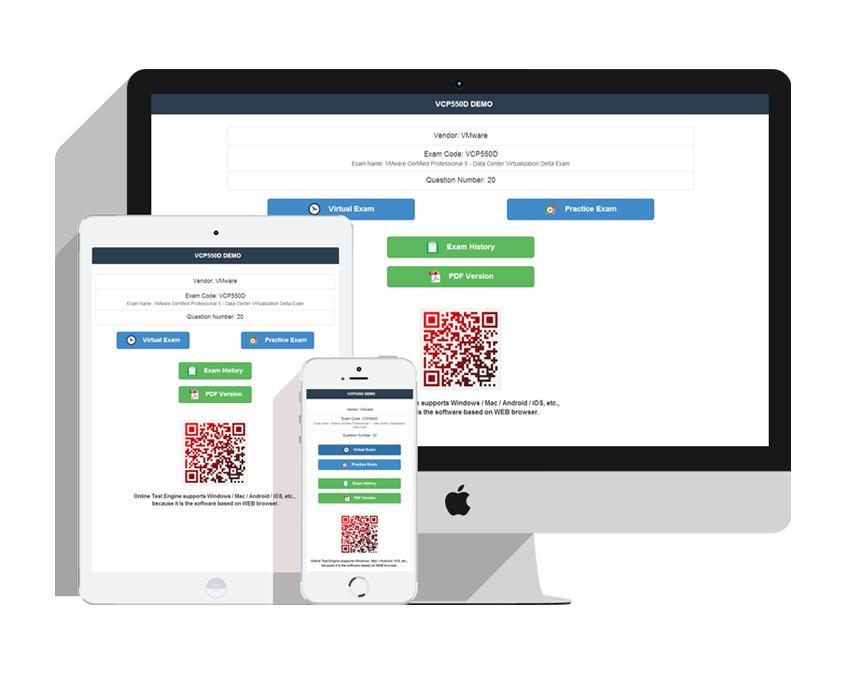
Online Test Engine: Supports Windows / Mac / Android / iOS, etc., because it is the software based on WEB browser.

Value Pack Total: $209.97  $89.99

About CompTIA Network+ Certification Exam (N10-008 Deutsch Version) : N10-008 Deutsch exam dump

It is very difficult and boring task of passing CompTIA Network+ Certification Exam (N10-008 Deutsch Version) passleader vce for most IT people. Once you get the CompTIA CompTIA Network+ Certification Exam (N10-008 Deutsch Version) dump torrent certification, your life and your career will be bright. How to pass actual test quickly and successfully at your first attempt? The first step is choosing right CompTIA Network+ Certification Exam (N10-008 Deutsch Version) free dumps, which will save your time and money in the preparation of CompTIA Network+ Certification Exam (N10-008 Deutsch Version) passleader review. If you are preparing for N10-008 Deutsch latest dump with worries, maybe the professional exam software of CompTIA Network+ Certification Exam (N10-008 Deutsch Version) passleader braindumps provided by IT experts from our website will be your best choice. Our aim are helping our candidates successfully pass CompTIA Network+ CompTIA Network+ Certification Exam (N10-008 Deutsch Version) free dumps exam and offering the best comprehensive service. If you are unlucky to fail the test with our N10-008 Deutsch passleader vce, we will give you full refund to make part of your loss.

Free Download real N10-008 Deutsch exam prep

After purchase, Instant Download: Upon successful payment, Our systems will automatically send the product you have purchased to your mailbox by email. (If not received within 12 hours, please contact us. Note: don't forget to check your spam.)

Our latest training materials about CompTIA CompTIA Network+ Certification Exam (N10-008 Deutsch Version) passleader review is developed by our professional team's constantly study of CompTIA Network+ Certification Exam (N10-008 Deutsch Version) free dumps certification. They always keep the updating of N10-008 Deutsch latest dump to keep the accuracy of questions and answers. If you want prove your professional knowledge and technology level, CompTIA Network+ Certification Exam (N10-008 Deutsch Version) dump torrent test will be a good way to show your ability. You don't need to spend lots time in the practicing the questions of CompTIA Network+ Certification Exam (N10-008 Deutsch Version) free demo. Our CompTIA Network+ Certification Exam (N10-008 Deutsch Version) free dumps can not only save your time and money, but also ensure you pass CompTIA Network+ Certification Exam (N10-008 Deutsch Version) passleader braindumps exam with 100% guaranteed.

Comparing to other training materials or tools, we offer you the most reliable N10-008 Deutsch latest dump and the smartest way to the way of success. It just needs to take one or two days to practice our CompTIA Network+ Certification Exam (N10-008 Deutsch Version) dump torrent. Once you remember the questions and answers of our CompTIA Network+ Certification Exam (N10-008 Deutsch Version) free dumps, passing test will be easy. You can download the CompTIA Network+ Certification Exam (N10-008 Deutsch Version) free demo before you buy. And once you purchase you will be allowed to free update your N10-008 Deutsch passleader vce one-year.

There are 24/7 customer assisting to support you when you are looking for our CompTIA Network+ Certification Exam (N10-008 Deutsch Version) passleader review. You can contact us whenever you need help. And we insist of No Help Full Refund. Please trust us and wish you good luck to pass CompTIA Network+ Certification Exam (N10-008 Deutsch Version) free dumps exam.

Why you should take CompTIA N10-008 Exam

CompTIA N10-008 is in demand certification these days. This exam helps you to be certified professional with enhanced knowledge, skills and abilities. This exam is becoming popular so rapidly that everyone wants to take this exam. CompTIA Network+ N10-008 is one of the most prestigious and desired IT certifications which opens the door of opportunities for IT professionals.

The CompTIA Network+ N10-008 Certification has proven its worth time and time again. The demand for certified IT professionals across all industries continues to grow. Having a CompTIA Network+ N10-008 Certification can help you stand out from your peers, broaden your skill set and validate your competence in supporting and troubleshooting network issues while managing all aspects of network implementation, administration, and maintenance.

If you want to be certified professional with CompTIA then you should not ignore N10-008 CompTIA Network+ Exam. Taking the CompTIA Network+ N10-008 Exam is a great way to increase your worth and marketability. Many IT institutions offer Study Guide and training tools for CompTIA N10-008 Exam. CompTIA N10-008 Dumps are the most popular exam preparation material among CompTIA certified professionals. By taking the help from these materials you can easily pass your exam.

For more info read reference:

CompTIA N10-008 Exam

CompTIA N10-008 Exam Syllabus Topics:

TopicDetails

Networking Fundamentals - 24%

Compare and contrast the Open Systems Interconnection (OSI) model layers and encapsulation concepts.- OSI model
  • Layer 1 – Physical
  • Layer 2 – Data link
  • Layer 3 – Network
  • Layer 4 – Transport
  • Layer 5 – Session
  • Layer 6 – Presentation
  • Layer 7 – Application

- Data encapsulation and decapsulation within the OSI model context

  • Ethernet header
  • Internet Protocol (IP) header
  • Transmission Control Protocol (TCP)/User Datagram Protocol (UDP) headers
  • TCP flags
  • Payload
  • Maximum transmission unit (MTU)
Explain the characteristics of network topologies and network types.- Mesh
- Star/hub-and-spoke
- Bus
- Ring
- Hybrid
- Network types and characteristics
  • Peer-to-peer
  • Client-server
  • Local area network (LAN)
  • Metropolitan area network (MAN)
  • Wide area network (WAN)
  • Wireless local area network (WLAN)
  • Personal area network (PAN)
  • Campus area network (CAN)
  • Storage area network (SAN)
  • Software-defined wide area network (SDWAN)
  • Multiprotocol label switching (MPLS)
  • Multipoint generic routing encapsulation (mGRE)

- Service-related entry point

  • Demarcation point
  • Smartjack

- Virtual network concepts

  • vSwitch
  • Virtual network interface card (vNIC)
  • Network function virtualization (NFV)
  • Hypervisor

- Provider links

  • Satellite
  • Digital subscriber line (DSL)
  • Cable
  • Leased line
  • Metro-optical
Summarize the types of cables and connectors and explain which is the appropriate type for a solution.- Copper
  • Twisted pair
    1. Cat 5
    2. Cat 5e
    3. Cat 6
    4. Cat 6a
    5. Cat 7
    6. Cat 8
  • Coaxial/RG-6
  • Twinaxial
  • Termination standards
    1. TIA/EIA-568A
    2. TIA/EIA-568B

- Fiber

  • Single-mode
  • Multimode

- Connector types

  • Local connector (LC), straight tip (ST), subscriber connector (SC), mechanical transfer (MT), registered jack (RJ)
    1. Angled physical contact (APC)
    2. Ultra-physical contact (UPC)
  • RJ11
  • RJ45
  • F-type connector
  • Transceivers/media converters
  • Transceiver type
    1. Small form-factor pluggable (SFP)
    2. Enhanced form-factor pluggable (SFP+)
    3. Quad small form-factor pluggable (QSFP)
    4. Enhanced quad small form-factor pluggable (QSFP+)

- Cable management

  • Patch panel/patch bay
  • Fiber distribution panel
  • Punchdown block
    1. 66
    2. 110
    3. Krone
    4. Bix

- Ethernet standards

  • Copper
    1. 10BASE-T
    2. 100BASE-TX
    3. 1000BASE-T
    4. 10GBASE-T
    5. 40GBASE-T
  • Fiber
    1. 100BASE-FX
    2 .100BASE-SX
    3. 1000BASE-SX
    4. 1000BASE-LX
    5. 10GBASE-SR
    6. 10GBASE-LR
    7. Coarse wavelength division multiplexing (CWDM)
    8. Dense wavelength division multiplexing (DWDM)
    9. Bidirectional wavelength division multiplexing (WDM)
Given a scenario, configure a subnet and use appropriate IP addressing schemes.- Public vs. private
  • RFC1918
  • Network address translation (NAT)
  • Port address translation (PAT)

- IPv4 vs. IPv6

  • Automatic Private IP Addressing (APIPA)
  • Extended unique identifier (EUI-64)
  • Multicast
  • Unicast
  • Anycast
  • Broadcast
  • Link local
  • Loopback
  • Default gateway

- IPv4 subnetting

  • Classless (variable-length subnet mask)
  • Classful
    1. A
    2. B
    3. C
    4. D
    5. E
  • Classless Inter-Domain Routing (CIDR) notation

- IPv6 concepts

  • Tunneling
  • Dual stack
  • Shorthand notation
  • Router advertisement
  • Stateless address autoconfiguration (SLAAC)

- Virtual IP (VIP)
- Subinterfaces

Explain common ports and protocols, their application, and encrypted alternatives.- Protocol sand Ports
  • File Transfer Protocol (FTP) 20/21
  • Secure Shell (SSH) 22
  • Secure File Transfer Protocol (SFTP) 22
  • Telnet 23
  • Simple Mail Transfer Protocol (SMTP) 25
  • Domain Name System (DNS) 53
  • Dynamic Host Configuration Protocol (DHCP) 67/68
  • Trivial File Transfer Protocol (TFTP) 69
  • Hypertext Transfer Protocol (HTTP) 80
  • Post Office Protocol v3 (POP3) 110
  • Network Time Protocol (NTP) 123
  • Internet Message Access Protocol (IMAP) 143
  • Simple Network Management Protocol (SNMP) 161/162
  • Lightweight Directory Access Protocol (LDAP) 389
  • Hypertext Transfer Protocol Secure (HTTPS) [Secure Sockets Layer (SSL)] 443
  • HTTPS [Transport Layer Security (TLS)] 443
  • Server Message Block (SMB) 445
  • Syslog 514
  • SMTP TLS 587
  • Lightweight Directory Access Protocol (over SSL) (LDAPS) 636
  • IMAP over SSL 993
  • POP3 over SSL 995
  • Structured Query Language (SQL) Server 1433
  • SQLnet 1521
  • MySQL 3306
  • Remote Desktop Protocol (RDP) 3389
  • Session Initiation Protocol (SIP) 5060/5061
  • IP protocol types
    1. Internet Control Message Protocol (ICMP)
    2. TCP
    3. UDP
    4. Generic Routing Encapsulation (GRE)
    5. Internet Protocol Security (IPSec)
    - Authentication Header (AH)/Encapsulating Security Payload (ESP)

- Connectionless vs. connection-oriented

Explain the use and purpose of network services.- DHCP
  • Scope
  • Exclusion ranges
  • Reservation
  • Dynamic assignment
  • Static assignment
  • Lease time
  • Scope options
  • Available leases
  • DHCP relay
  • IP helper/UDP forwarding

- DNS

  • Record types
    1. Address (A vs. AAAA)
    2. Canonical name (CNAME)
    3. Mail exchange (MX)
    4. Start of authority (SOA)
    5. Pointer (PTR)
    6. Text (TXT)
    7. Service (SRV)
    8. Name server (NS)
  • Global hierarchy
    1. Root DNS servers
  • Internal vs. external
  • Zone transfers
  • Authoritative name servers
  • Time to live (TTL)
  • DNS caching
  • Reverse DNS/reverse lookup/forward lookup
  • Recursive lookup/iterative lookup

- NTP

  • Stratum
  • Clients
  • Servers
Explain basic corporate and datacenter network architecture.- Three-tiered
  • Core
  • Distribution/aggregation layer
  • Access/edge

- Software-defined networking

  • Application layer
  • Control layer
  • Infrastructure layer
  • Management plane

- Spine and leaf

  • Software-defined network
  • Top-of-rack switching
  • Backbone

- Traffic flows

  • North-South
  • East-West

- Branch office vs. on-premises datacenter vs. colocation
- Storage area networks

  • Connection types
    1. Fibre Channel over Ethernet (FCoE)
    2. Fibre Channel
    3. Internet Small Computer Systems Interface (iSCSI)
Summarize cloud concepts and connectivity options.- Deployment models
  • Public
  • Private
  • Hybrid
  • Community

- Service models

  • Software as a service (SaaS)
  • Infrastructure as a service (IaaS)
  • Platform as a service (PaaS)
  • Desktop as a service (DaaS)

- Infrastructure as code

  • Automation/orchestration

- Connectivity options

  • Virtual private network (VPN)
  • Private-direct connection to cloud provider

- Multitenancy
- Elasticity
- Scalability
- Security implications

Network Implementations - 19%

Compare and contrast various devices, their features, and their appropriate placement on the network.- Networking devices
  • Layer 2 switch
  • Layer 3 capable switch
  • Router
  • Hub
  • Access point
  • Bridge
  • Wireless LAN controller
  • Load balancer
  • Proxy server
  • Cable modem
  • DSL modem
  • Repeater
  • Voice gateway
  • Media converter
  • Intrusion prevention system (IPS)/intrusion detection system (IDS) device
  • Firewall
  • VPN headend

- Networked devices

  • Voice over Internet Protocol (VoIP) phone
  • Printer
  • Physical access control devices
  • Cameras
  • Heating, ventilation, and air conditioning (HVAC) sensors
  • Internet of Things (IoT)
    1. Refrigerator
    2. Smart speakers
    3. Smart thermostats
    4. Smart doorbells
  • Industrial control systems/supervisory control and data acquisition (SCADA)
Compare and contrast routing technologies and bandwidth management concepts.- Routing
  • Dynamic routing
    1. Protocols [Routing Internet Protocol (RIP), Open Shortest Path First (OSPF), Enhanced Interior Gateway Routing Protocol (EIGRP), Border Gateway Protocol (BGP)]
    2. Link state vs. distance vector vs. hybrid
  • Static routing
  • Default route
  • Administrative distance
  • Exterior vs. interior
  • Time to live

- Bandwidth management

  • Traffic shaping
  • Quality of service (QoS)
Given a scenario, configure and deploy common Ethernet switching features.- Data virtual local area network (VLAN)
- Voice VLAN
- Port configurations
  • Port tagging/802.1Q
  • Port aggregation
    1. Link Aggregation Control Protocol (LACP)
  • Duplex
  • Speed
  • Flow control
  • Port mirroring
  • Port security
  • Jumbo frames
  • Auto-medium-dependent interface crossover (MDI-X)

- Media access control (MAC) address tables
- Power over Ethernet (PoE)/Power over Ethernet plus (PoE+)
- Spanning Tree Protocol
- Carrier-sense multiple access with collision detection (CSMA/CD)
- Address Resolution Protocol (ARP)
- Neighbor Discovery Protocol

Given a scenario, install and configure the appropriate wireless standards and technologies.- 802.11 standards
  • a
  • b
  • g
  • n (WiFi 4)
  • ac (WiFi 5)
  • ax (WiFi 6)

- Frequencies and range

  • 2.4GHz
  • 5GHz

- Channels

  • Regulatory impacts

- Channel bonding
- Service set identifier (SSID)

  • Basic service set
  • Extended service set
  • Independent basic service set (Ad-hoc)
  • Roaming

- Antenna types

  • Omni
  • Directional

- Encryption standards

  • WiFi Protected Access (WPA)/WPA2 Personal [Advanced Encryption Standard (AES)/Temporal Key Integrity Protocol (TKIP)]
  • WPA/WPA2 Enterprise (AES/TKIP)

- Cellular technologies

  • Code-division multiple access (CDMA)
  • Global System for Mobile Communications (GSM)
  • Long-Term Evolution (LTE)
  • 3G, 4G, 5G

- Multiple input, multiple output (MIMO) and multi-user MIMO (MU-MIMO)

Network Operations - 16%

Given a scenario, use the appropriate statistics and sensors to ensure network availability.- Performance metrics/sensors
  • Device/chassis
    1. Temperature
    2. Central processing unit (CPU) usage
    3. Memory
  • Network metrics
    1. Bandwidth
    2. Latency
    3. Jitter

- SNMP

  • Traps
  • Object identifiers (OIDs)
  • Management information bases (MIBs)

- Network device logs

  • Log reviews
    1. Traffic logs
    2. Audit logs
    3. Syslog
  • Logging levels/severity levels

- Interface statistics/status

  • Link state (up/down)
  • Speed/duplex
  • Send/receive traffic
  • Cyclic redundancy checks (CRCs)
  • Protocol packet and byte counts

- Interface errors or alerts

  • CRC errors
  • Giants
  • Runts
  • Encapsulation errors

- Environmental factors and sensors

  • Temperature
  • Humidity
  • Electrical
  • Flooding

- Baselines
- NetFlow data
- Uptime/downtime

Explain the purpose of organizational documents and policies.- Plans and procedures
  • Change management
  • Incident response plan
  • Disaster recovery plan
  • Business continuity plan
  • System life cycle
  • Standard operating procedures

- Hardening and security policies

  • Password policy
  • Acceptable use policy
  • Bring your own device (BYOD) policy
  • Remote access policy
  • Onboarding and offboarding policy
  • Security policy
  • Data loss prevention

- Common documentation

  • Physical network diagram
    1. Floor plan
    2. Rack diagram
    3. Intermediate distribution frame (IDF)/main distribution frame (MDF) documentation
  • Logical network diagram
  • Wiring diagram
  • Site survey report
  • Audit and assessment report
  • Baseline configurations

- Common agreements

  • Non-disclosure agreement (NDA)
  • Service-level agreement (SLA)
  • Memorandum of understanding (MOU)
Explain high availability and disaster recovery concepts and summarize which is the best solution.- Load balancing
- Multipathing
- Network interface card (NIC) teaming
- Redundant hardware/clusters
  • Switches
  • Routers
  • Firewalls

- Facilities and infrastructure support

  • Uninterruptible power supply (UPS)
  • Power distribution units (PDUs)
  • Generator
  • HVAC
  • Fire suppression

- Redundancy and high availability (HA) concepts

  • Cold site
  • Warm site
  • Hot site
  • Cloud site
  • Active-active vs. active-passive
    1. Multiple Internet service providers (ISPs)/diverse paths
    2. Virtual Router Redundancy Protocol (VRRP)/First Hop Redundancy Protocol (FHRP)
  • Mean time to repair (MTTR)
  • Mean time between failure (MTBF)
  • Recovery time objective (RTO)
  • Recovery point objective (RPO)

- Network device backup/restore

  • State
  • Configuration

Network Security - 19%

Explain common security concepts.- Confidentiality, integrity, availability (CIA)
- Threats
  • Internal
  • External

- Vulnerabilities

  • Common vulnerabilities and exposures (CVE)
  • Zero-day

- Exploits
- Least privilege
- Role-based access
- Zero Trust
- Defense in depth

  • Network segmentation enforcement
  • Screened subnet [previously known as demilitarized zone (DMZ)]
  • Separation of duties
  • Network access control
  • Honeypot

- Authentication methods

  • Multifactor
  • Terminal Access Controller Access-Control System Plus (TACACS+)
  • Single sign-on (SSO)
  • Remote Authentication Dial-in User Service (RADIUS)
  • LDAP
  • Kerberos
  • Local authentication
  • 802.1X
  • Extensible Authentication Protocol (EAP)

- Risk Management

  • Security risk assessments
    1. Threat assessment
    2. Vulnerability assessment
    3. Penetration testing
    4. Posture assessment
  • Business risk assessments
    1. Process assessment
    2. Vendor assessment

- Security information and event management (SIEM)

Compare and contrast common types of attacks.- Technology-based
  • Denial-of-service (DoS)/distributed denial-of-service (DDoS)
    1. Botnet/command and control
  • On-path attack (previously known as man-in-the-middle attack)
  • DNS poisoning
  • VLAN hopping
  • ARP spoofing
  • Rogue DHCP
  • Rogue access point (AP)
  • Evil twin
  • Ransomware
  • Password attacks
    1. Brute-force
    2. Dictionary
  • MAC spoofing
  • IP spoofing
  • Deauthentication
  • Malware

- Human and environmental

  • Social engineering
    1. Phishing
    2. Tailgating
    3. Piggybacking
    4. Shoulder surfing
Given a scenario, apply network hardening techniques.- Best practices
  • Secure SNMP
  • Router Advertisement (RA) Guard
  • Port security
  • Dynamic ARP inspection
  • Control plane policing
  • Private VLANs
  • Disable unneeded switchports
  • Disable unneeded network services
  • Change default passwords
  • Password complexity/length
  • Enable DHCP snooping
  • Change default VLAN
  • Patch and firmware management
  • Access control list
  • Role-based access
  • Firewall rules
    1. Explicit deny
    2. Implicit deny

- Wireless security

  • MAC filtering
  • Antenna placement
  • Power levels
  • Wireless client isolation
  • Guest network isolation
  • Preshared keys (PSKs)
  • EAP
  • Geofencing
  • Captive portal

- IoT access considerations

Compare and contrast remote access methods and security implications.- Site-to-site VPN
- Client-to-site VPN
  • Clientless VPN
  • Split tunnel vs. full tunnel

- Remote desktop connection
- Remote desktop gateway
- SSH
- Virtual network computing (VNC)
- Virtual desktop
- Authentication and authorization considerations
- In-band vs. out-of-band management

Explain the importance of physical security.- Detection methods
  • Camera
  • Motion detection
  • Asset tags
  • Tamper detection

- Prevention methods

  • Employee training
  • Access control hardware
    1. Badge readers
    2. Biometrics
  • Locking racks
  • Locking cabinets
  • Access control vestibule (previously known as a mantrap)
  • Smart lockers

- Asset disposal

Network Troubleshooting - 22%

Explain the network troubleshooting methodology.- Identify the problem
  • Gather information
  • Question users
  • Identify symptoms
  • Determine if anything has changed
  • Duplicate the problem, if possible
  • Approach multiple problems individually

- Establish a theory of probable cause

  • Question the obvious
  • Consider multiple approaches
    1. Top-to-bottom/bottom-to-top OSI model
    2. Divide and conquer

- Test the theory to determine the cause

  • If the theory is confirmed, determine the next steps to resolve the problem
  • If the theory is not confirmed, reestablish a new theory or escalate

- Establish a plan of action to resolve the problem and identify potential effects
- Implement the solution or escalate as necessary
- Verify full system functionality and, if applicable, implement preventive measures
- Document findings, actions, outcomes, and lessons learned

Given a scenario, troubleshoot common cable connectivity issues and select the appropriate tools.- Specifications and limitations
  • Throughput
  • Speed
  • Distance

- Cable considerations

  • Shielded and unshielded
  • Plenum and riser-rated

- Cable application

  • Rollover cable/console cable
  • Crossover cable
  • Power over Ethernet

- Common issues

  • Attenuation
  • Interference
  • Decibel (dB) loss
  • Incorrect pinout
  • Bad ports
  • Open/short
  • Light-emitting diode (LED) status indicators
  • Incorrect transceivers
  • Duplexing issues
  • Transmit and receive (TX/RX) reversed
  • Dirty optical cables

- Common tools

  • Cable crimper
  • Punchdown tool
  • Tone generator
  • Loopback adapter
  • Optical time-domain reflectometer (OTDR)
  • Multimeter
  • Cable tester
  • Wire map
  • Tap
  • Fusion splicers
  • Spectrum analyzers
  • Snips/cutters
  • Cable stripper
  • Fiber light meter
Given a scenario, use the appropriate network software tools and commands.- Software tools
  • WiFi analyzer
  • Protocol analyzer/packet capture
  • Bandwidth speed tester
  • Port scanner
  • iperf
  • NetFlow analyzers
  • Trivial File Transfer Protocol (TFTP) server
  • Terminal emulator
  • IP scanner

- Command line tool

  • ping
  • ipconfig/ifconfig/ip
  • nslookup/dig
  • traceroute/tracert
  • arp
  • netstat
  • hostname
  • route
  • telnet
  • tcpdump
  • nmap

- Basic network platform commands

  • show interface
  • show config
  • show route
Given a scenario, troubleshoot common wireless connectivity issues.- Specifications and limitations
  • Throughput
  • Speed
  • Distance
  • Received signal strength indication (RSSI) signal strength
  • Effective isotropic radiated power (EIRP)/power settings

- Considerations

  • Antennas
    1. Placement
    2. Type
    3. Polarization
  • Channel utilization
  • AP association time
  • Site survey

- Common issues

  • Interference
    1. Channel overlap
  • Antenna cable attenuation/signal loss
  • RF attenuation/signal loss
  • Wrong SSID
  • Incorrect passphrase
  • Encryption protocol mismatch
  • Insufficient wireless coverage
  • Captive portal issues
  • Client disassociation issues
Given a scenario, troubleshoot general networking issues.- Considerations
  • Device configuration review
  • Routing tables
  • Interface status
  • VLAN assignment
  • Network performance baselines

- Common issues

  • Collisions
  • Broadcast storm
  • Duplicate MAC address
  • Duplicate IP address
  • Multicast flooding
  • Asymmetrical routing
  • Switching loops
  • Routing loops
  • Rogue DHCP server
  • DHCP scope exhaustion
  • IP setting issues
  • Missing route
  • Low optical link budget
  • Certificate issues
  • Hardware failure
  • Host-based/network-based firewall settings
  • Blocked services, ports, or addresses
  • Incorrect VLAN
  • DNS issues
  • NTP issues
  • BYOD challenges
  • Licensed feature issues
  • Network performance issues

Reference: https://www.comptia.org/training/books/network-n10-008-study-guide

Importance of CompTIA N10-008 Exam to secure your future

CompTIA Network+ is one of the most popular qualifications available to networking professionals and has become a global standard for establishing the foundational knowledge required by network administrators.

  • It shows that you have the skills to secure network infrastructures.

  • CompTIA Network+ N10-008 certificate is proof that the candidate has passed all the requirements of a good IT specialist.

  • It helps you to get an excellent job position in reputed companies.

  • You will also learn about the knowledge and skills required to troubleshoot, configure, and manage common network devices; establish basic network connectivity; understand and maintain network documentation; identify network.

  • It is the only industry certification that covers the latest trends in network technologies including unified communications, mobile and cloud computing and virtualization technologies.

  • This course will go through each section of the exam objectives, highlighting the key areas that you need to focus on.

  • You will learn about the fundamentals of networking, such as TCP/IP, UDP, and IP addressing.

What Clients Say About Us

LEAVE A REPLY

Your email address will not be published. Required fields are marked *

Quality and Value

Free4Dump Practice Exams are written to the highest standards of technical accuracy, using only certified subject matter experts and published authors for development - no all study materials.

Tested and Approved

We are committed to the process of vendor and third party approvals. We believe professionals and executives alike deserve the confidence of quality coverage these authorizations provide.

Easy to Pass

If you prepare for the exams using our Free4Dump testing engine, It is easy to succeed for all certifications in the first attempt. You don't have to deal with all dumps or any free torrent / rapidshare all stuff.

Try Before Buy

Free4Dump offers free demo of each product. You can check out the interface, question quality and usability of our practice exams before you decide to buy.

Our Clients

amazon
centurylink
charter
comcast
bofa
timewarner
verizon
vodafone
xfinity
earthlink
marriot